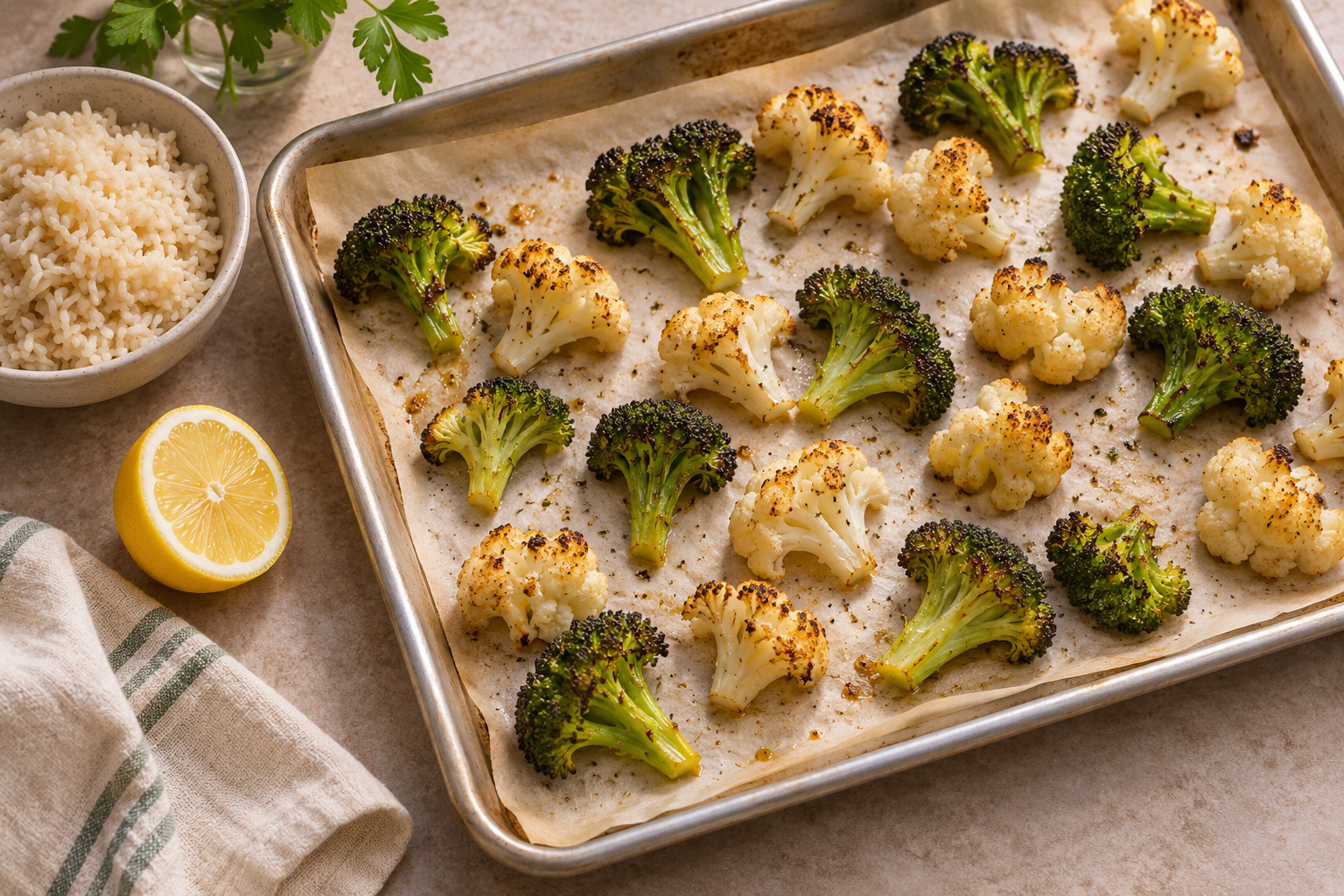
If you pull a bag of frozen vegetables out of the freezer at six and want dinner by seven, the easiest mistake is pouring the entire bag into a small tray. The vegetables thaw, release water and crowd each other. By the time the centres are hot, the edges may still be pale. Here’s a way to set up the tray, decide which vegetables can share it and use the same batch in three different dinners.
As an Amazon Associate I earn from qualifying purchases.
Give the vegetables room to brown

Start with a rimmed metal sheet pan and check that it fits your oven with room at the sides. The rim contains the oil and makes it easier to move a loaded pan. Spread the vegetables in one layer. If you can’t see pieces of the tray between the larger florets, divide the bag between two pans or cook in batches. A bigger oven won’t make up for an overloaded pan. The vegetables still need exposed surface area.
For a starting point, try frozen broccoli on a bare lightly oiled pan or on parchment rated for your oven temperature. Parchment helps when cleanup is the main priority. A bare pan gives you direct contact with the metal, which is useful when you want to compare browning. Keep the paper inside the rim and follow the package’s heat limits. If vegetables arrive frozen into one block, choose loose pieces or separate them before spreading them onto the tray.
Sort by shape and size

Cooking time depends on the size and shape of the pieces. Give big cauliflower florets their own side of the pan and smaller vegetables the other side. Then you can lift out the smaller pieces while the larger ones finish. For a midweek dinner, it’s simpler to use two vegetables whose package instructions call for similar roasting times. Save tiny peas and corn for a dish that benefits from their moisture, such as a soup or a covered skillet.
Use the package’s oven instructions as your starting point, including any directions about cooking from frozen. Toss the vegetables lightly with oil and seasonings in a mixing bowl so you can see how much you’re adding. A spoonful of oil at a time is easier to distribute than a generous pour into a corner of the tray. Try smoked paprika and garlic powder for wraps, or dried oregano and black pepper for bowls. Hold the lemon juice and other wet toppings until the vegetables come out.
Turn one piece before turning the whole tray

Near the first check time on the package, pull out the oven rack far enough to see what’s happening. Use oven mitts to steady the pan and a thin turner to lift one of the larger pieces. Look at the side that was against the metal. If it’s coloured and releases easily, turn the rest where needed. If the pan has visible puddles, leave it in the oven a little longer and check again. On your next batch, use fewer pieces per pan or keep watery vegetables on a separate tray.
Check the thickest pieces to see whether the centres are cooked through according to the package instructions, then use the colour and texture to decide when you’re happy with the batch. Pieces at the edge may finish before pieces in the middle. It’s fine to transfer the finished ones to a plate with kitchen tongs while the rest catch up. A second pair of tongs or a clean spoon makes serving easier if you’re offering toppings at the table.
Turn the tray into dinner

For a grain bowl, combine the vegetables with cooked rice or farro, warm chickpeas and a spoonful of tahini loosened with lemon juice and water. If you want a wrap, slice the large pieces after roasting and add them to a warmed flatbread with hummus, shredded cabbage and a squeeze of lemon. For pasta, fold the vegetables into hot pasta with a little pasta water, olive oil and grated cheese or toasted breadcrumbs. In all three, add the vegetables at the end so they keep the texture you worked for.
If you want leftovers, set aside the extra portion before adding dressing or sauce. Use a shallow lidded container so it’s easy to spread out the vegetables for storage. Refrigerate promptly. When you’re ready to reheat, spread them out in a skillet or on a pan so moisture can escape. Sauced vegetables can go straight into a soup or pasta dish, where soft edges are less noticeable.
For your first batch, pick a single bag of broccoli and compare two pieces from different parts of the pan. If one zone consistently browns more quickly, rotate the pan next time and use the slower zone for the smaller pieces. Keep the combination that fits your evening. One tray of well-spaced vegetables and a ready-to-use grain can save more time than trying to roast everything in the freezer at once.


Leave a Reply