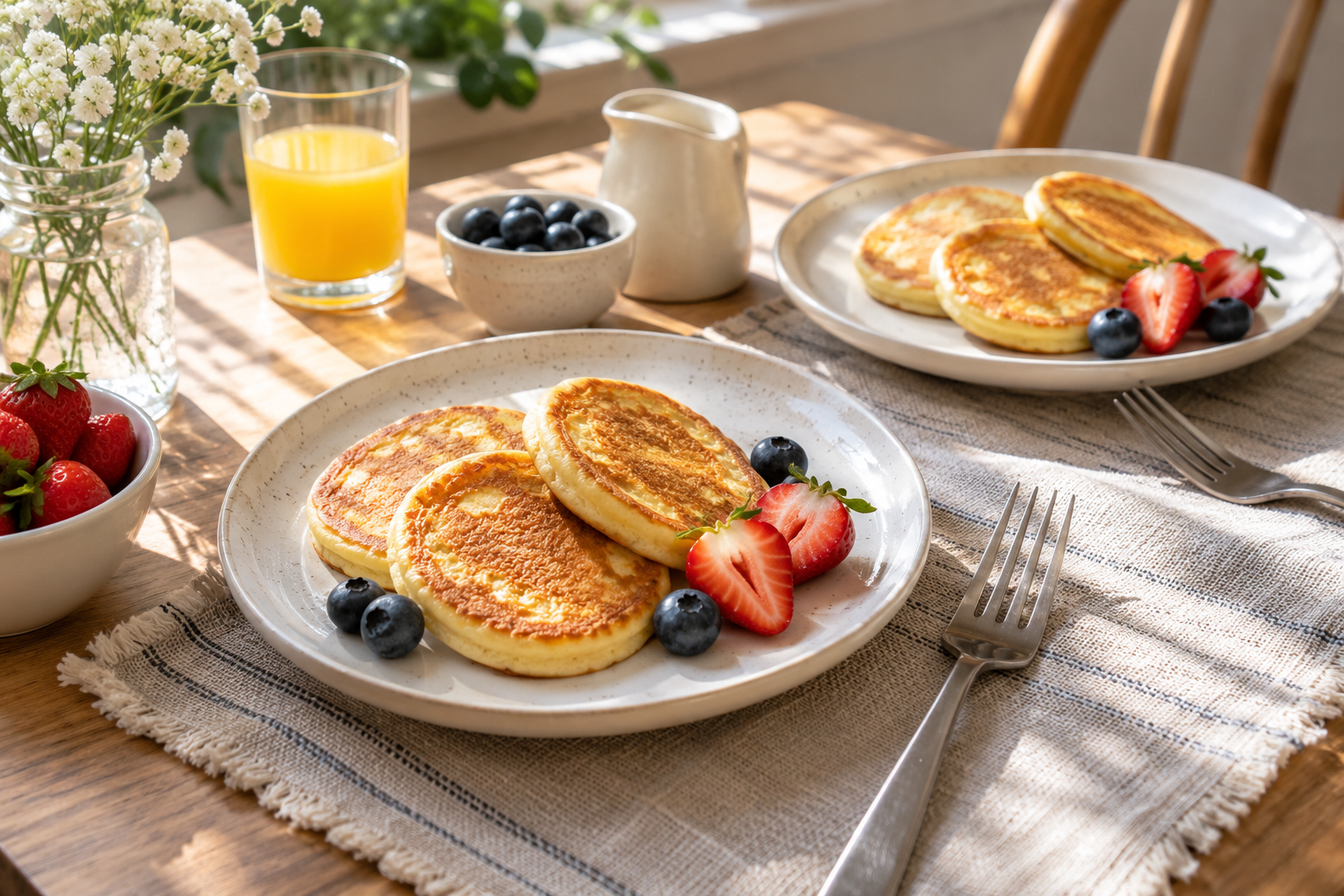
A small pancake breakfast can still leave you with a stack of dishes, a half bowl of batter and one pancake that looks nothing like the others. The easiest way to make a short stack is to choose your portion before you heat the pan and use the first pancake to check both the batter and the heat. The method below is for a breakfast for two, with about six small pancakes. The final count will depend on what the bowl and scoop hold. It also works as a way to portion a small batch from a pancake recipe you already like.
As an Amazon Associate I earn from qualifying purchases.
Start with a bowl sized for breakfast for two

For a basic batch, whisk together ¾ cup all-purpose flour, 1½ teaspoons baking powder, 1 tablespoon sugar and a pinch of salt. In a separate cup, beat one egg with ⅔ cup milk or unsweetened plant beverage and 1 tablespoon neutral oil. Pour the wet mixture into the dry ingredients, stirring until the dry streaks disappear. A few small lumps are fine. This batter should flow off a scoop into a small round on the pan. If it barely drops from the scoop, stir in another tablespoon of milk.
A mixing bowl with a short pouring lip can keep the batter from running down the outside if you pour it into a smaller jug. If you scoop directly from the bowl, a wide base is more useful because it lets you get the last portion with fewer passes. A heat-safe measuring jug gives you one place to measure the milk and whisk in the egg before mixing. A small whisk reaches the corners of a narrow jug, which helps separate the egg white from the yolk without pulling out a full-size mixer.
Pick the portion and check it in the pan

Set a small skillet over medium heat and brush on a little neutral oil. Start with one pancake so you can see how the batter spreads. Use a quarter-cup measure or a scoop that holds about the same amount. A spring-release portion scoop can help when the batter is thick enough to cling to the measure. A regular cup works just as well with a thinner batter. Level each scoop in roughly the same way so the last two rounds cook at about the same pace as the first.
Let the first pancake cook until bubbles begin to open near the centre and the edge looks set. Slide a thin turner under one edge to check the colour. Flip when it can lift cleanly and the underside is golden. Cook the other side until the centre is set. If the first pancake browns before the edge sets, lower the heat for the next one and give the pan a moment to adjust. The first round is the best time to make that change, before you fill the whole cooking surface.
Give each pancake enough room to turn

Compare the size of the spread pancake with the flat part of the pan. The rim of a skillet can make it look roomier than the usable cooking surface. If two portions would touch, cook them one at a time or use a little less batter per round. A small nonstick skillet can be convenient for one pancake because the low rim gives the turner room to slide underneath. Use a turner that suits the skillet’s surface and can support most of the pancake when you lift it.
Try lifting the pancake only high enough to turn it. Once it lands, the surface will settle on its own. Use the same patch of the pan for the next one so you can compare the timing. If you want room for two at a time, test a larger skillet on the burner you plan to use. Start near the middle and leave a gap between portions. As you finish a round, move it to a plate and use the rest of the batter before adding toppings or washing the bowl.
Keep one note for next time

If the first pancake was thicker than the others, note whether the skillet was too cool, the scoop was too full or the batter needed another small splash of milk. Change one of those things next time and keep the rest steady. A silicone spatula makes it easier to scrape the remaining batter into the scoop for the last pancake. If the remaining amount is smaller than a full portion, cook it on its own and watch it closely. It will usually be ready before the larger ones.
Eat the stack while it’s warm and choose a topping you already have, such as berries or sliced banana. If you plan to make the same breakfast again, jot down the scoop size and how many pancakes it made in your pan. That tells you more about your household’s next batch than the yield on a recipe card. The aim is to finish with enough for the people at the table and a clean sense of what to repeat the next time you reach for the whisk.


Leave a Reply