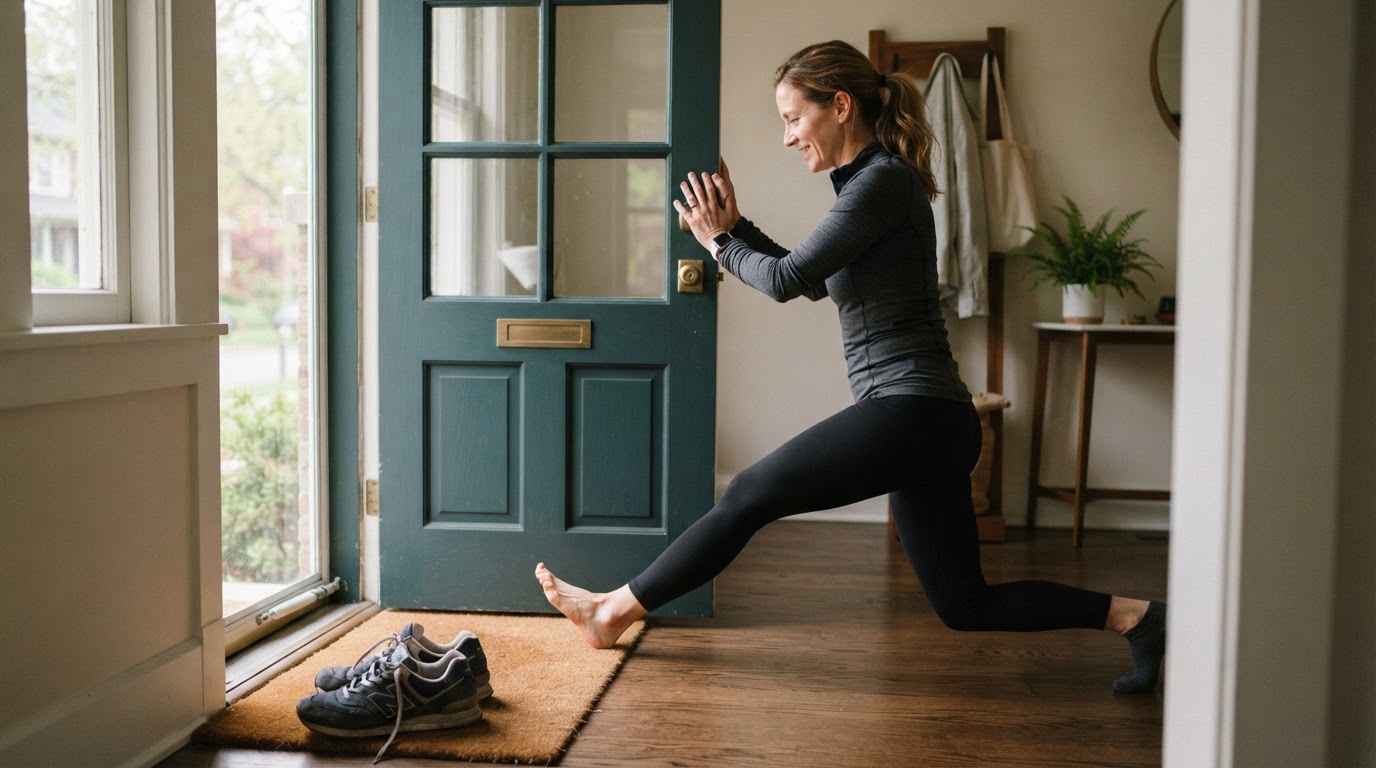
The first block of a walk often becomes the warm-up, but a few deliberate movements at the door can make the transition less abrupt. This five-minute primer uses a wall or stable chair, a small clear area and no required equipment. It is not intended to treat injury or guarantee pain-free walking. If you have persistent swelling, recent injury, balance concerns, neurological symptoms, cardiovascular issues or pain that changes your gait, seek appropriate professional advice. Check weather and walking surfaces first; mobility drills do not make ice, extreme heat or poor visibility safe.
Affiliate disclosure: As an Amazon Associate I earn from qualifying purchases.
Set shoes, support and route first

Put on the footwear you plan to walk in and stand beside a sturdy wall or chair. Move bags and cords out of the area. If the walk may finish in low light, place a high-visibility reflective vest on Amazon.ca (paid link) with the shoes so visibility gear is not forgotten. Check that the route matches current conditions and tell someone where you are going when appropriate. Start with thirty seconds of easy weight shifts, keeping a hand close to support. The purpose is to notice how the feet feel before leaving, not to test balance.
Minute one: slow ankle circles
Lift one heel slightly or sit if balance is uncertain. Trace a small circle with the toes five times in each direction, then switch sides. Keep the movement slow and comfortable; larger is not automatically better. A Casio F91W watch on Amazon.ca (paid link) can time the primer without opening a phone. If circles pinch or provoke pain, reduce the range or use simple toe points instead. Avoid forcing joints through stiffness. The ankle should move while the rest of the leg remains quiet, and breathing should stay normal.
Minute two: heel-to-toe rocks
With both feet on the floor, shift gently toward the balls of the feet and back toward the heels. Hold support and keep the motion small enough that you never feel as if you will tip. A CAP fitness equipment mat on Amazon.ca (paid link) can define the station indoors, but use it only if it lies flat and does not slide. Complete ten slow rocks, pause and repeat if comfortable. This is a rehearsal of controlled pressure through the foot, not a calf-strength test. Stop if the movement causes pain or dizziness.
Minute three: supported calf raises

Rise onto the balls of both feet, pause briefly and lower with control. Use the wall or chair as much as needed. Begin with five to eight repetitions and keep the ankles from rolling outward. Yes4All ankle-weight pair on Amazon.ca (paid link) are not needed for this primer; adding load changes the demand and should not be treated as a casual warm-up progression. If two-leg raises are difficult, reduce height. If they are easy, keep the tempo slow rather than switching to one leg without appropriate preparation.
Minute four: marching and gentle knee drive
March in place with a comfortable knee height, rolling through the foot quietly. Let the arms swing naturally. If darkness is possible, confirm that a Fenix E20 flashlight on Amazon.ca (paid link) or adjustable headlamp on Amazon.ca (paid link) is charged and easy to operate before leaving. Lights help with visibility but do not replace a safer route. Continue marching for about forty seconds, then take a few wider but still controlled steps. Notice whether laces, clothing or carried items interfere with movement and fix them at the door.
Minute five: ten purposeful practice steps
Walk ten slow steps across the room, turn carefully and return. Keep stride length natural rather than reaching the front foot far ahead. If you track activity, note only that the primer was completed in a Clever Fox fitness journal on Amazon.ca (paid link); it does not need to count as a workout. Once outside, begin at an easy pace and let the first minutes build gradually. A primer cannot compensate for fatigue, unsafe surfaces or symptoms that should be assessed. Turning back is a valid decision when conditions change.
The practical finish
Keep this routine by the door for one week and pay attention to the first five minutes of each walk. If one drill consistently feels useful, keep it. If another feels awkward, shorten it or discuss the issue with an appropriate professional rather than forcing range. The primer should make leaving simpler, not create another barrier. Shoes on, support nearby, five calm minutes, then an easy first block—that is enough structure for an everyday walk.
Quick checklist
- Check route and weather first.
- Use stable support.
- Keep ankle circles small and slow.
- Control heel-to-toe rocks.
- Lower calf raises quietly.
- Test lights before leaving.
- Begin the walk at an easy pace.
- Turn back when conditions or symptoms change.


Leave a Reply