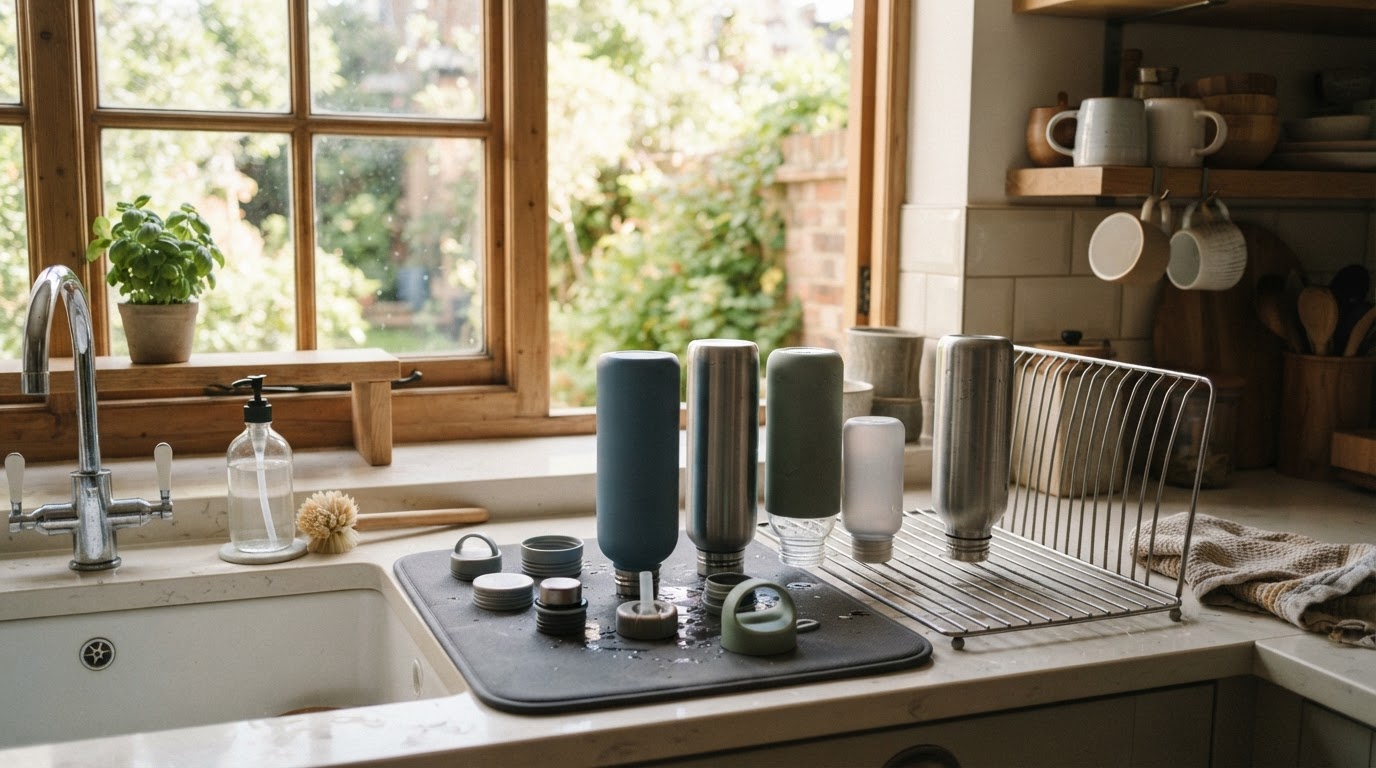
A water bottle station gives clean bottles, lids and small parts a predictable home. This can reduce the time spent finding a matching top when you are packing a bag or preparing a workout. Start by gathering what your household already owns. You may need a better arrangement rather than more bottles, and a little sorting can reveal which pieces are useful every week.
Affiliate disclosure: As an Amazon Associate I earn from qualifying purchases. Links marked paid link may earn a commission.
Sort bottles by regular use

Put the bottles and lids on a clear counter and match each set. Check manufacturer guidance before deciding how to clean unfamiliar parts. Set aside pieces that are damaged or no longer suitable for use. Group the remaining bottles by the situations they serve, such as a desk, a lunch bag or a walk. Notice which ones are easy to carry and which remain in the cupboard.
Keep the number of bottles manageable for the space you have. If several people share the station, assign a shelf area or use a simple removable marker to help identify each person’s bottle. Make the everyday choices easy to reach. You can store occasional-use bottles elsewhere if they crowd out the ones you need most often. A visible, orderly group is easier to maintain than a cupboard packed with loosely matched lids.
Give cleaning parts a clear route

Plan where used bottles arrive, where they are washed and where the clean pieces dry. Follow the maker’s instructions for lids, valves, straws and seals. These parts can have different care requirements from the main bottle. Keep a suitable brush near the washing area if the instructions call for one. Avoid choosing a bottle whose small parts are difficult for you to access or inspect.
Use a clean drying space that lets components sit securely. Keep the parts of each bottle together so they are easy to reassemble after drying. A small tray may help corral lids, but avoid a crowded tray where parts are piled over one another. Before storing the bottle, make sure it has dried in accordance with the product guidance. An effective station handles the complete cleaning process, not just the appearance of the finished shelf.
Match bottle size to the places it travels

Measure the pocket in your backpack, the opening in your bottle holder and the shelf where the bottle will live. A large capacity can be useful, but it also changes the size and filled weight. Check whether you can comfortably open the lid, lift the bottle and drink from it in your usual setting. A wide opening may make some cleaning tasks easier, while a different lid may suit drinking on the move.
Think about the actual situations in which you reach for water. A bottle for your desk can have different requirements from one carried on a walk. If you often put it in a bag, read the closure instructions and any leak-related guidance carefully. Test the product as directed before carrying it alongside electronics. Choose the features that meet your routine and leave the decorative details until those practical questions are answered.
Keep the daily reset short

At the end of the day, put used bottles in the agreed washing area. Return dry pieces to the same shelf and check that the next day’s bottle is ready. If you use more than one bottle, keep the backup complete rather than borrowing its lid for another set. A short reset is easier when each item has a clear place and the shelf contains only what fits.
Revisit the station after a week. If lids still get lost, change how they are grouped. If the drying area is always full, look at the number of bottles in circulation and the timing of washing. Solve one recurring problem before adding another organizer. This approach helps the station stay useful through ordinary household routines. You should be able to take out a clean bottle and put it away again without moving several unrelated objects.
Try the station for a full week before adding storage accessories. Each morning, notice whether a clean complete bottle is ready. Each evening, check whether the washing and drying areas have enough room for the used pieces. If a lid is repeatedly missing, group it with its bottle after drying rather than leaving all lids in one loose pile. If one bottle is difficult to clean, review its instructions and decide whether it suits your routine. The most useful improvement may be reducing the number of mismatched pieces. Choose replacements based on the bottle’s whole daily cycle.
If you need an item for this setup, browse the relevant options below and compare the exact listing with your measurements and care requirements. These links open Amazon.ca search results, where the available products and sellers can change. Check the selected product’s dimensions, included parts, current price, delivery options and return conditions before ordering. The pictured scenes are AI-generated illustrations of the routine. They do not show or test a particular branded product.
Browse water bottle cleaning brush on Amazon.ca (paid link).





Leave a Reply