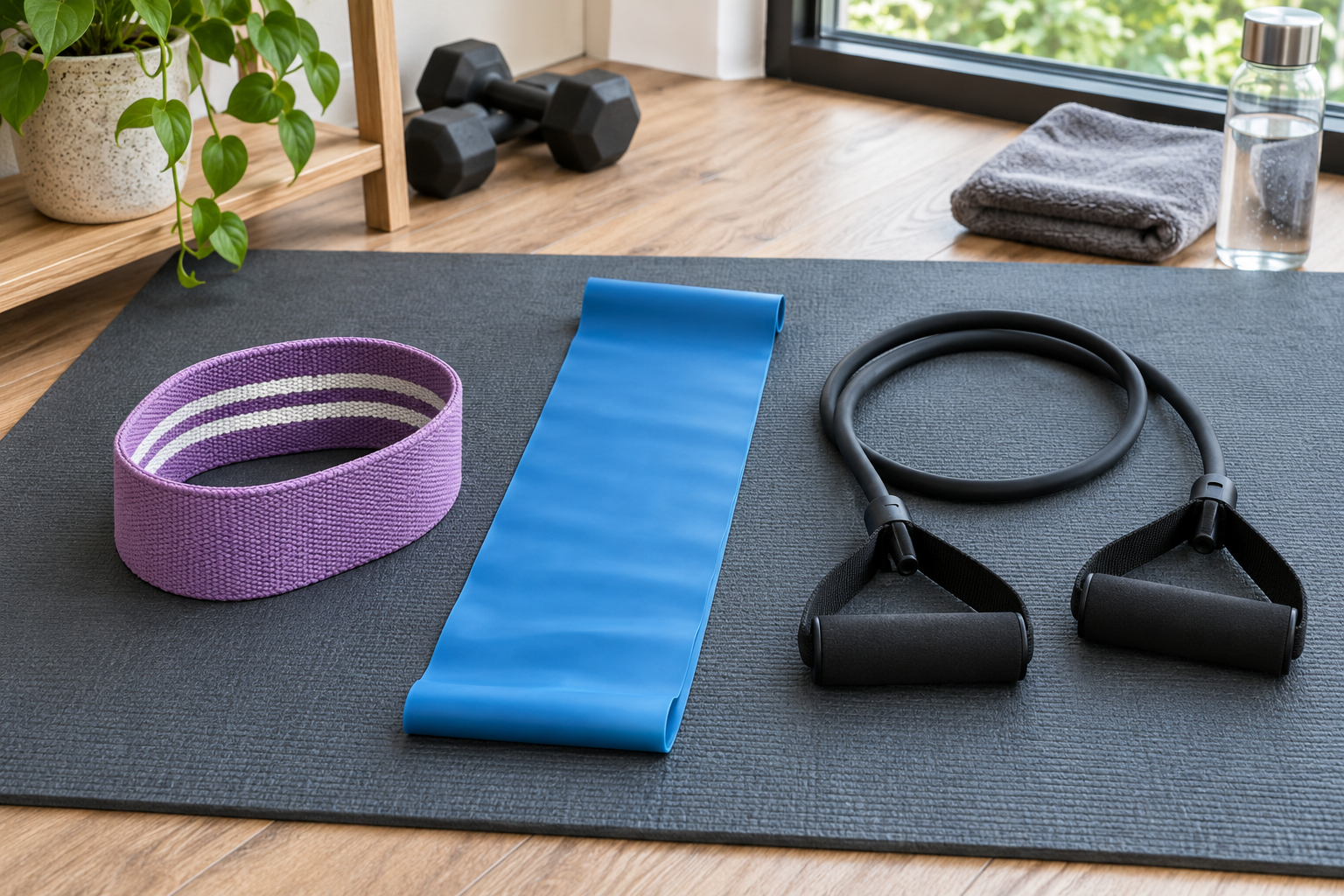
A drawer full of exercise bands can make a short home workout harder to start. You reach for a band, stretch it experimentally, then swap it when it feels wrong for the first movement. Start with the shape and length your exercise calls for, then decide how much pull you can control through the whole motion. A compact loop, a long flat strip and a handled tube each feel different in use. A simple way to compare them is to pick one movement you already know and see which type makes it easiest to set up and repeat.
As an Amazon Associate I earn from qualifying purchases.
Match the band’s shape to the movement

Start by checking the instructions for the exercise you want to do. For a lateral step with the band set above the knees, a short loop is usually the simplest shape to try. It stays closed without a knot and takes little room to store. A short fabric loop may feel broader against clothing, while a thin rubber loop takes up less space in a small pouch. Both should leave room to start in a comfortable stance. If the loop feels tight as soon as you put it on, try a longer or lighter option before you take a step.
A long flat exercise band gives your hands more room to move apart. That can be handy for a light standing pull-apart when you can hold the band comfortably around chest height. Begin with your hands wide enough that you can move without straining or jerking. Check the band maker’s guide for how far it can be stretched. Keep your face out of the path of the band and return slowly to the starting position. If you have to grip an edge tightly to keep it from slipping, try a different width or material.
Try a light option before deciding what heavy means

The colour on one brand’s band may represent a different amount of pull from the same colour on another. Use the brand’s chart as a starting point and see how the band feels in the movement you plan to do. Try a few unhurried repetitions. You should be able to ease back to the start with as much control as you had pulling away from it. If you have to shorten the motion, hold your breath or snap back on the return, give yourself a lighter band or more slack where the exercise permits it.
A handled resistance tube is worth comparing if you prefer holding a shaped grip. With a model that permits a standing curl, the handles can help you hold the tube without pinching the rubber in your palms. Check how the tube is meant to be positioned and keep it centred under your feet if the maker specifies that setup. Test only with light pull until you know it stays put. If you would rather use the band without handles for other exercises, consider whether the tube will earn its place alongside what you already own.
Give your feet a predictable place to start

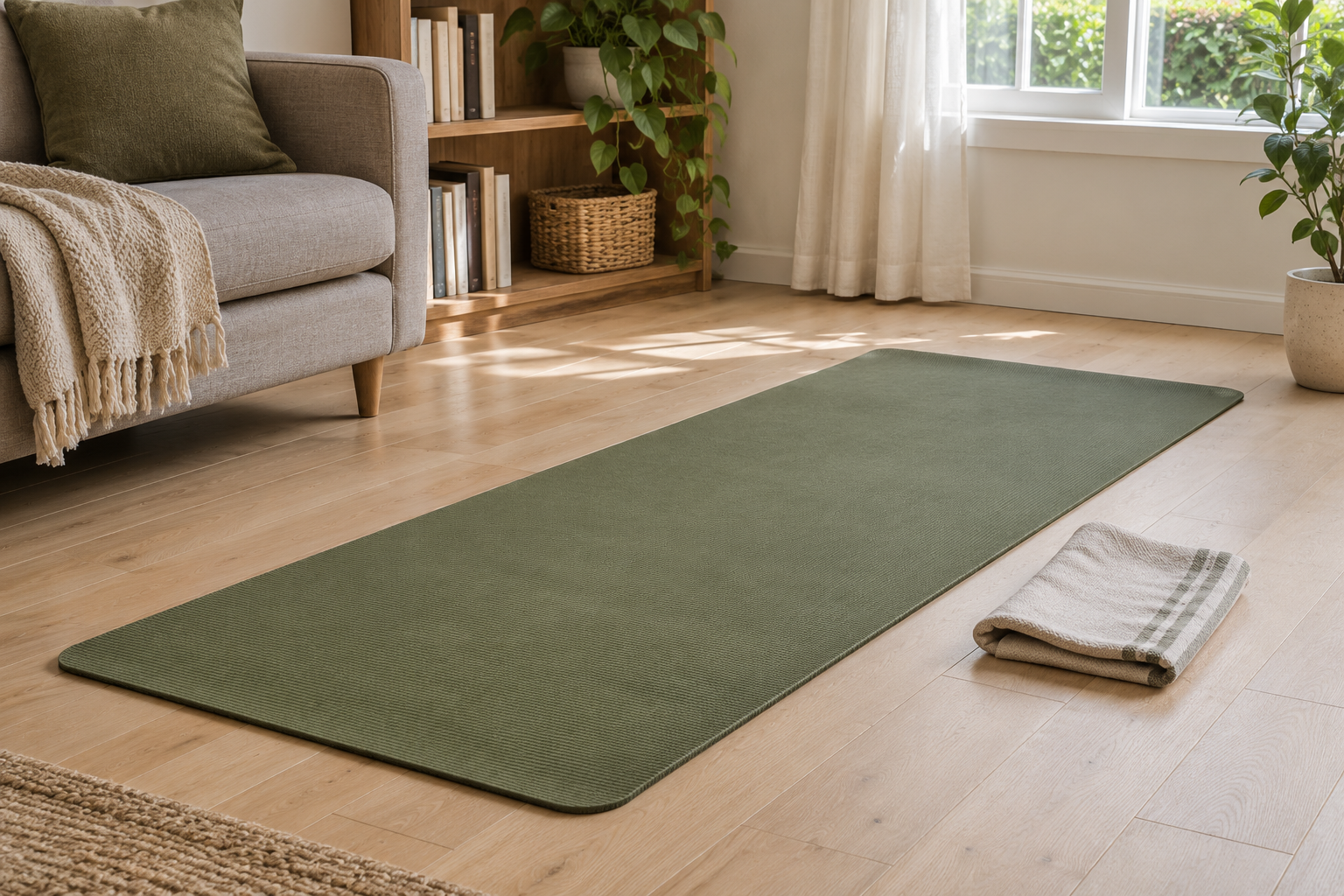
Clear the space before you test a new band. For side steps, leave enough room to take one or two steps in either direction without catching a shoe on a chair leg. A flat exercise mat can help mark the starting spot for floor work, where a short loop may be used for a different exercise. For standing steps, stay on a surface that gives you room and traction. If the edge of a mat is in your path, move it aside. It is easier to notice the feel of the band when you are not also navigating the room.
For a simple comparison, place just the two bands you want to try beside the mat. Use one for a familiar motion, pause and then test the other if it suits the same movement. Keep your notes specific. “Broad loop stays comfortable above knees” gives you more to go on tomorrow than “green was good.” A small card in the workout space is plenty if you want to remember the band and starting position.
Check the band as you put it away

Look for worn seams, small cracks, thinning or damaged clips before using a band. Set a damaged one aside and follow the maker’s replacement guidance. A small drawstring pouch can keep clean, dry bands apart from sharp equipment and make the right band easier to find. Let a damp band dry as directed before putting it away. Store the band with its reference card or in a separate pocket if several types look similar when folded.
Next time, take out the band for the first movement and leave the others in the pouch until you need them. If you reach for one loop most days, that’s useful information. Keep it where it is easy to find and add a different band only when a particular exercise calls for it. The best test is whether you can set up the movement, control the return and put the band away without sorting through the whole drawer.






Leave a Reply