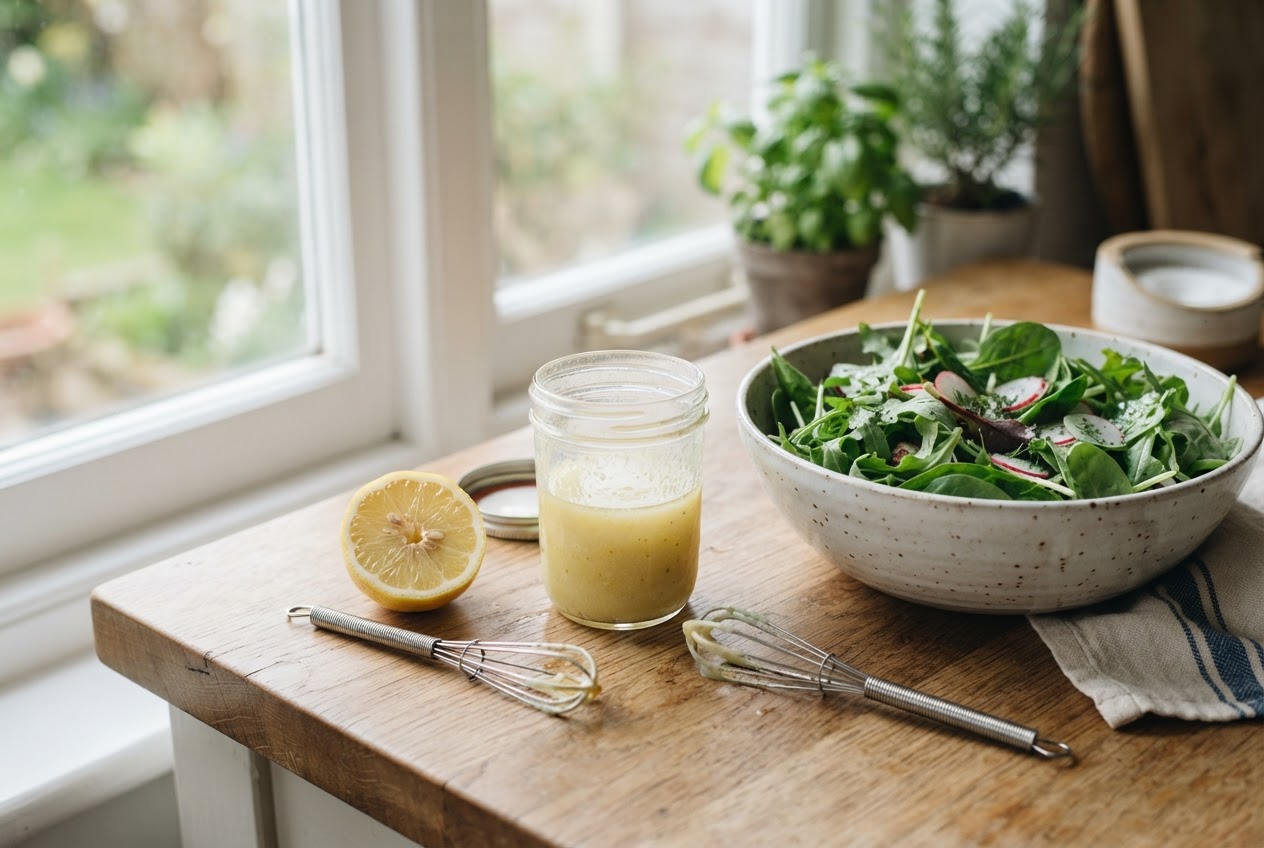
A whole bottle of dressing makes sense when everyone at the table likes the same thing. For two plates of greens, it can be easier to squeeze half a lemon, measure a few spoonfuls and mix just enough to eat. A tiny batch also lets you decide whether tonight’s salad needs a sharp splash of lemon or a rounder dressing for peppery leaves. Here’s a starting ratio, two ways to mix it, and a way to taste it that accounts for what’s actually on the plate.
As an Amazon Associate I earn from qualifying purchases.
Start with three spoonfuls and a dab of mustard

For two small side salads, start with two tablespoons of olive oil, one tablespoon of lemon juice, a quarter teaspoon of Dijon mustard and a small pinch of fine salt. That gives you about three tablespoons of dressing. Start by tossing the greens with two tablespoons total and hold the rest in reserve. The amount a salad needs varies more with the size and texture of its leaves than with the number of bowls on the table.
A handheld citrus press can strain out most seeds as you squeeze. If you squeeze by hand, do it over a separate cup so you can fish out the seeds before measuring the juice. Use a set of measuring spoons with both tablespoon and quarter-teaspoon sizes if you want to make the same version next time. When the lemon gives you less juice than expected, make up the difference with a little mild vinegar or scale down the oil to match. If you use a strongly flavoured vinegar, start with a few drops and taste before adding more.
Whisk in a bowl when you want to watch it come together

Put the lemon juice, mustard and salt in a small, stable bowl. Stir first so the mustard disperses and the salt has a chance to dissolve. Slowly add the oil while whisking. A mini whisk fits a bowl that holds only a few spoonfuls of liquid and keeps the ingredients close enough together for the whisk to reach them. Start with a spoon if you’re using a very shallow bowl and the whisk keeps pushing the dressing out toward the rim.
This method works especially well when one person likes more lemon than the other. Mix the basic version and spoon a little into a separate dish. Add an extra squeeze to just that portion and keep the original for the second plate. The dressing can separate as it sits. Give it a few strokes before serving and check the bottom of the bowl for a streak of mustard that escaped the first mix.
Shake it when you want fewer dishes

Use a small jar with a tight lid or a dressing shaker if you prefer to measure, mix and pour from one container. Add the lemon juice and salt first, then the mustard and oil. Screw the lid on fully, hold the jar over the counter or sink and shake until the mixture looks evenly combined. Leave room for the liquid to move. If you choose a large jar for just three spoonfuls, you may lose more dressing to the sides than you pour onto a salad.
A small kitchen funnel is handy if your shaker has a narrow opening or if the lip of your measuring cup drips. With a wide-mouth jar, skip the funnel and pour directly. Choose the jar when you want to carry the dressing to the table and let people dress their own salads. Choose the bowl when you want to tweak two portions separately or use a whisk to bring the dressing together again just before tossing.
Taste it on one leaf first

Spoon a few drops onto one leaf or a slice of whatever vegetable makes up most of the salad. Dressing straight off a spoon can seem stronger than it will once it’s spread over food. Try a leaf of romaine if that’s what you’re serving. For a salad with feta or olives, taste the dressing on a bite that includes one of those ingredients before adding extra salt.
If the dressing is sharper than you want, whisk in a teaspoon of oil and taste again. If it’s flat, try a little more lemon juice. If the lemon you started with was particularly tart, a tiny dab of honey can soften the flavour. Make one adjustment at a time, especially in a batch this size. A little extra mustard can be lovely on cabbage and very noticeable on tender lettuce. The aim is to make the greens taste better to you, so let the sample bite decide what goes in next.
Toss lightly and serve what you mixed

Put the greens in a bowl big enough to turn them over easily. Dry off visible water first so the dressing can coat them. Drizzle some around the sides of the bowl, then lift and turn the leaves with salad tongs or clean hands. A pair of small tongs can be easier to steer around a bowl made for two, especially when you’re lifting delicate leaves. Stop once the leaves have a light sheen. Add a little more dressing to the plate if it needs it.
Try the same base on cucumber and chopped dill, or stir a pinch of dried oregano into the batch for chickpeas and tomatoes. For shredded cabbage, taste a dressed forkful and let the bowl sit briefly while you set the table, then toss again. Write down the one change you’d repeat. “More lemon for cucumber” is easier to use on a busy night than trying to remember a whole new recipe.



Leave a Reply