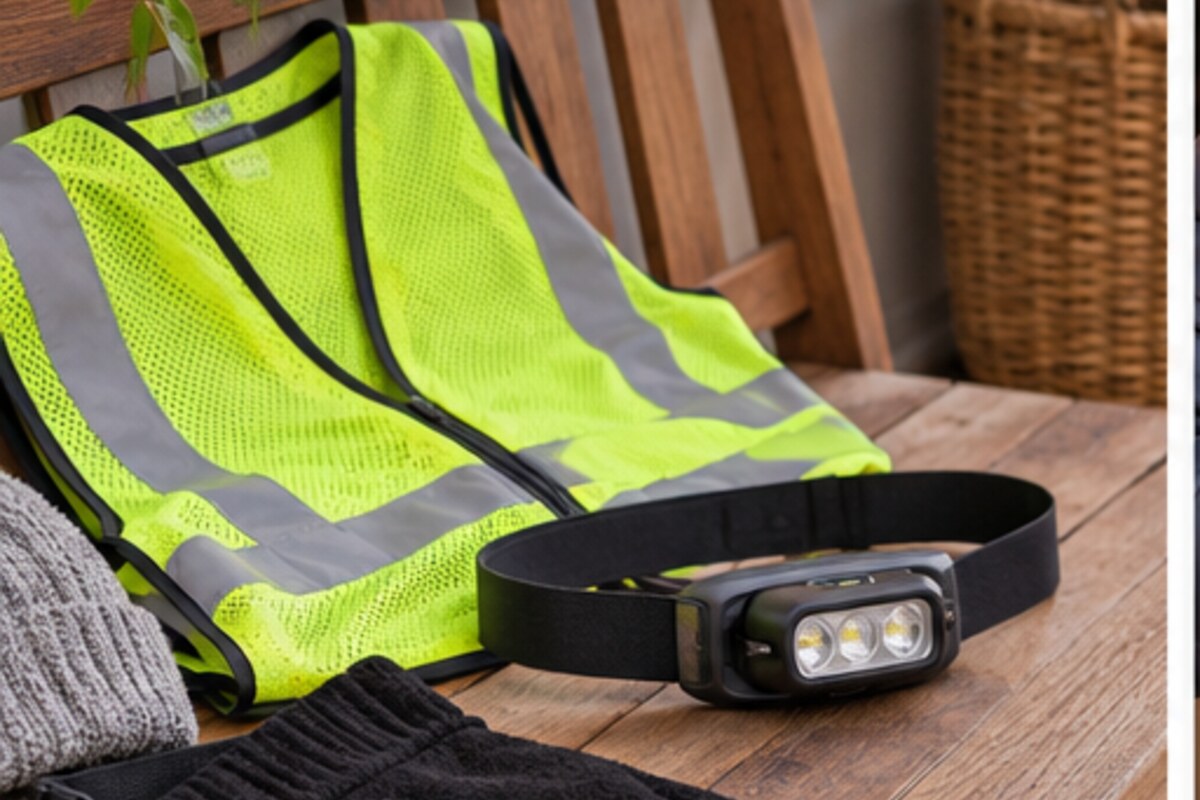
The hardest part of a cold-weather walk is often the ten minutes spent looking for gloves, charging a light and deciding whether the reflective vest is in the car. An entryway kit removes those decisions. Keep visibility gear, one warm accessory set and a small light in a dedicated bag or basket beside the door. The kit does not replace checking weather, route conditions or personal safety needs; it simply makes the basic equipment easy to find and easy to reset.
Affiliate disclosure: As an Amazon Associate I earn from qualifying purchases.
Build the kit around visibility

Start with one reflective layer that fits over your usual jacket. A simple vest such as the high-visibility reflective vest on Amazon.ca (paid link) is easy to keep by the door. For walks that begin or end in darkness, an illuminated option such as the Zacro LED reflective vest on Amazon.ca (paid link) can add active lighting, but it still does not make you visible from every angle or replace attentive route choices. Check batteries or charging before leaving, wear colours that contrast with the environment and assume drivers may not see you.
Add a light you can operate with gloves
A handheld light such as the Fenix E20 flashlight on Amazon.ca (paid link) lets you aim at uneven pavement, while an adjustable headlamp on Amazon.ca (paid link) keeps both hands free. Choose one primary light and store a backup only if you will maintain it. Test the switch while wearing gloves. Point beams toward the ground when passing other walkers so you do not impair their vision. A reflective belt or sash such as the LED reflective belt sash on Amazon.ca (paid link) can be the compact option for a second jacket or travel bag.
- Keep the setup small enough to reset in one pass.
- Use the product directions rather than assuming every material works the same way.
- Change one variable at a time so you can tell what actually helped.
Pack for the first ten minutes, not the whole closet

Add one pair of gloves, a hat or ear covering and a thin neck layer. Keep these in a breathable pouch after they are completely dry. If the forecast is wet, include a small bag for damp items so they do not soak the rest of the kit. Choose footwear for the actual surface and turn back if ice, wind or visibility makes the route unsafe. Anyone with medical conditions affected by cold or exertion should follow personalized clinical advice.
Use a sixty-second return routine
When you come home, hang the reflective layer, recharge the active light if needed and spread damp gloves or hats to dry. Return the kit to the same hook only when the pieces are ready. Put the next walk’s essentials by the door before bedtime if mornings are rushed. If one item repeatedly migrates to the car or another coat, buy nothing yet—change the storage location so the kit sits where you naturally remove that item.
The practical finish
The entryway kit succeeds when leaving takes less thought. Keep the contents small, test lights regularly and make the reset part of taking off your shoes. Before every walk, still check the weather, choose a familiar route when conditions are poor and tell someone your plan when appropriate.
Make the route part of the kit
Add a small card with two route options: a short well-lit loop and a longer daylight route. Include an emergency contact and any information you intentionally carry, while protecting personal details. Check municipal alerts, weather and surface conditions before leaving. A reflective vest helps others notice you, but it does not make icy sidewalks, extreme cold or poor visibility safe. Choose the conservative route when conditions change.
If you walk with a stroller, mobility aid or pet, attach visibility accessories only where they do not interfere with brakes, straps, wheels or movement. Test the full setup in daylight. Keep hands free when balance is uncertain and avoid headphones that block environmental sound. The entryway kit should shorten preparation, not encourage you to ignore a condition that deserves a cancelled or indoor walk.
Before you call it ready
- Check weather, visibility and walking surfaces.
- Choose one reflective layer that fits over the jacket.
- Test light switches while wearing gloves.
- Carry only the warm accessories you routinely use.
- Keep damp gear out of the packed kit.
- Select a conservative route when conditions change.
- Charge active lights after the walk.
- Return every dry item to the same entryway location.
Do one daylight practice walk with the complete kit. Notice whether straps bounce, lights point correctly and gloves can operate zippers and switches. Adjust at home where it is warm and bright, not beside a dark road after the walk has already started. Recheck the fit whenever you change coats or add winter layers.





Leave a Reply