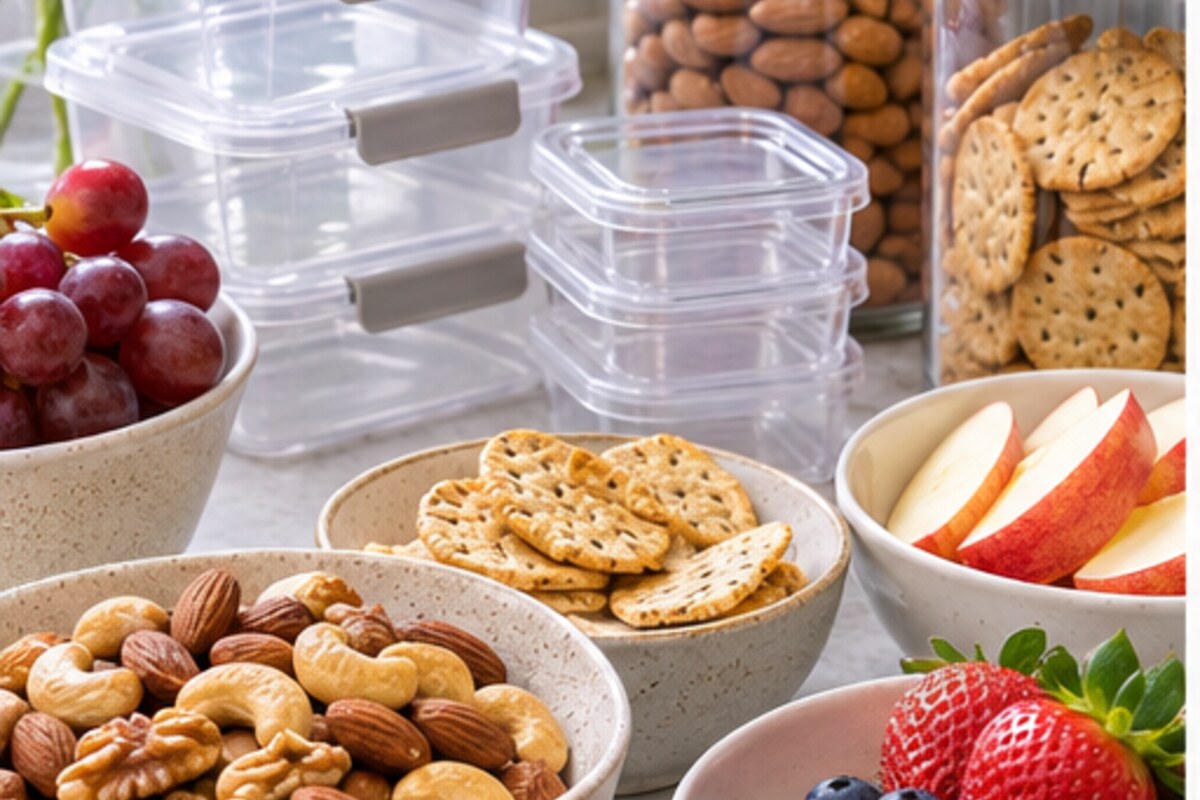
The best snack station is not the one with twenty matching bins. It is the shelf that lets you assemble something satisfying before convenience turns into random grazing. Build it around combinations rather than single foods: one produce option, one protein or fat option and one crisp or chewy option. Keep everyday choices visible, put backup packages behind them and give the whole station a ten-minute refill limit. This is a household organization idea, not a prescribed eating plan; adapt it for allergies, preferences and professional nutrition advice.
Affiliate disclosure: As an Amazon Associate I earn from qualifying purchases.
Choose a shelf at hand level

Pick one shelf that adults can see without crouching and that children can access only if appropriate for your household. Remove expired items and move baking supplies or dinner ingredients elsewhere. Use wide-mouth glass jars on Amazon.ca (paid link) for foods that benefit from a rigid container, but keep original labels and allergen information available. Small reusable sauce containers on Amazon.ca (paid link) are useful for dips, seeds or toppings that turn a plain snack into a combination. Do not decant foods if doing so would make ingredient or allergy information unclear.
Prep components, not complete rules
Wash only the produce you can store safely and use within its appropriate window. Portion sturdy items into reusable storage bags on Amazon.ca (paid link) so they are easy to grab, then pair them at serving time with yogurt alternatives, cheese if tolerated, hummus, nut or seed butter, or another household staple. A set of stainless measuring cups such as the stainless dry measuring cups on Amazon.ca (paid link) can make batch portioning faster, but the cup is a convenience tool, not a moral measure of food. Keep at least one option that requires no prep for days when the station is nearly empty.
- Keep the setup small enough to reset in one pass.
- Use the product directions rather than assuming every material works the same way.
- Change one variable at a time so you can tell what actually helped.
Label the refill job

Use waterproof square labels on Amazon.ca (paid link) to mark broad zones such as “crunchy,” “fruit” and “add-on,” or simply write the item name and opened date. Put backup packages directly behind the front containers so refilling does not require a pantry search. Keep a tiny note inside the cupboard listing the three items that disappear fastest. When one front bin empties, move its backup forward and add the item to the grocery list. This is faster than waiting until the entire shelf looks bare.
The ten-minute weekly reset
Set a timer. Minute one and two: remove crumbs and empty packages. Minutes three through six: refill two or three containers, not every container in the pantry. Minutes seven and eight: check produce and discard anything spoiled. Minutes nine and ten: wash the small containers and write the grocery gaps. Stop when the timer ends. If the system cannot be maintained in ten minutes, it contains too many categories. A compact station works because its capacity is visible and limited.
The practical finish
Review the shelf after one week. Items that were never chosen may be in the wrong location, require too much preparation or simply not appeal to the people using the station. Replace them with realistic favourites rather than adding another bin. The goal is quicker decisions and easier restocking, not a pantry photo shoot.
Make the shelf work for different days
Create three levels of effort. Level one is truly grab-and-go: a piece of fruit and a packaged or pre-portioned companion. Level two needs assembly: crackers with a spread or vegetables with dip. Level three is a mini meal for a longer gap. You do not need a separate bin for each level; a small card on the shelf can list two combinations. This helps when hunger makes choosing harder and keeps the station from becoming a wall of isolated snack foods.
If several people use the shelf, assign one shared basket and optional personal bins only when allergies or preferences make separation useful. Label clearly and prevent cross-contact according to the household’s needs. Review opened dates and storage directions rather than assuming every snack belongs at room temperature. The station should support safe storage first, then convenience.
Before you call it ready
- Choose one visible shelf with a clear capacity.
- Keep original allergen information available.
- Offer combinations instead of isolated foods.
- Place backup packages directly behind front containers.
- Label the item or zone clearly.
- Store refrigerated foods where they belong.
- Stop the refill when the ten-minute timer ends.
- Replace ignored options instead of adding more bins.
Keep the grocery list beside the refill zone for one cycle. When a front container empties, write the item immediately instead of trying to remember later. That single cue connects pantry organization to actual shopping and prevents the station from becoming a collection of empty bins.



Leave a Reply