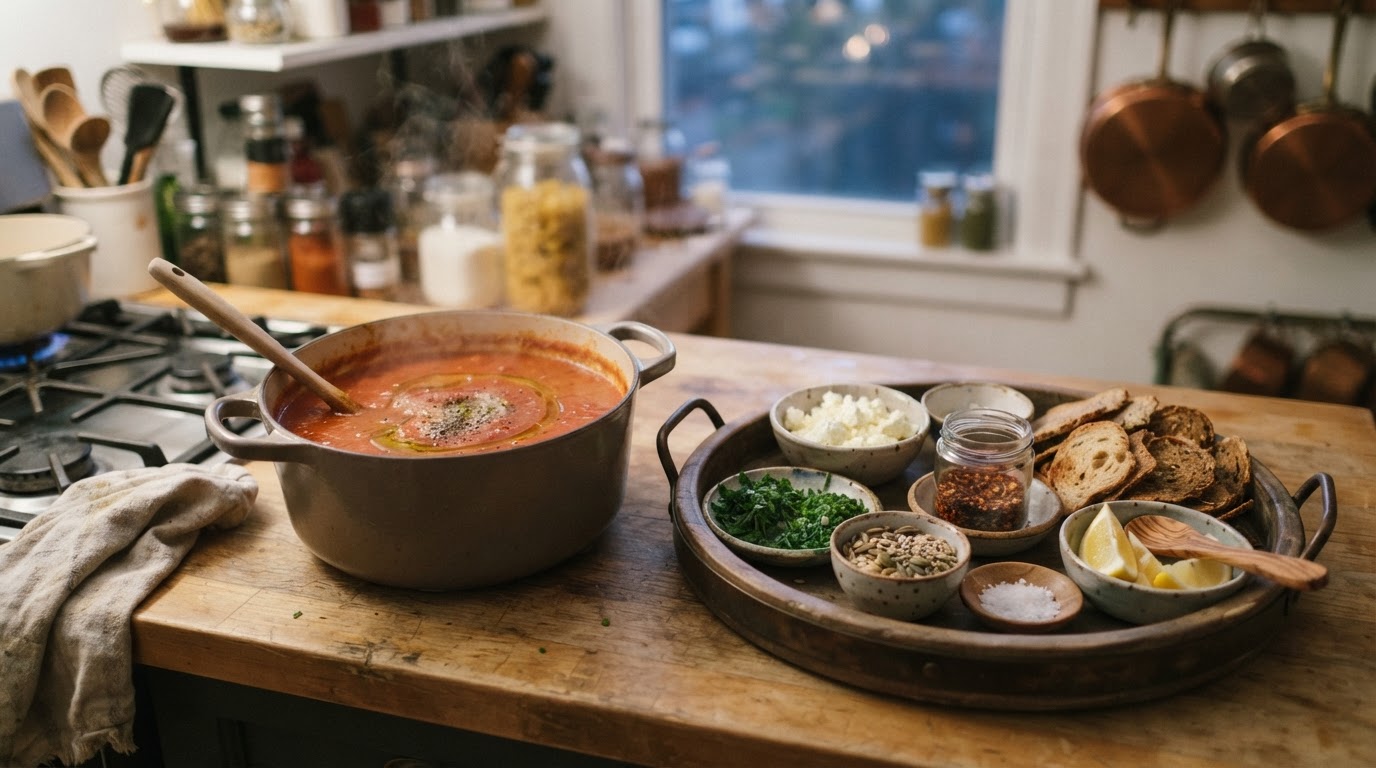
Cooking two separate dinners is rarely the best answer when the real difference is texture, heat or acidity. A small soup-topping tray lets one base pot become two personalized bowls. The useful version is not a restaurant buffet. It is four or five ingredients, each with a clear role, prepared while the soup warms. Keep refrigerated toppings cold until serving and use separate utensils when allergies or cross-contact are concerns.
Affiliate disclosure: As an Amazon Associate I earn from qualifying purchases.
Pick one crunchy, one fresh and one bright option

Start with categories rather than a long shopping list. Crackers, toasted seeds or chickpeas provide crunch. Chopped herbs or sliced green onions add freshness. Lemon or lime adds brightness. Use the Victorinox Fibrox chef’s knife on Amazon.ca (paid link) on a stable board and keep the pieces small enough to eat comfortably with soup. Set a five-minute KADAMS kitchen timer on Amazon.ca (paid link); when it rings, stop adding options. The tray should make dinner easier, not create another sink full of prep bowls.
Give heat its own container
Chili oil, hot sauce or pepper flakes should not be stirred into the shared pot when one person prefers a mild bowl. Portion the spicy finish into small reusable sauce containers on Amazon.ca (paid link) and give it a dedicated spoon. Label unfamiliar mixtures so nobody guesses. When children, allergies or medical restrictions are involved, keep unsuitable ingredients clearly separated and follow the household’s safety practices. A topping tray is a service tool, not a reason to blur important food boundaries.
Use tiny vessels instead of dinner bowls
A topping only needs enough space for a few spoonfuls. The small wide-mouth glass jars on Amazon.ca (paid link) keep chopped herbs or seeds visible, while the mini serving tongs on Amazon.ca (paid link) let people take crunchy pieces without putting fingers into the shared dish. Arrange the strongest flavours at one end and mild options at the other. Put a small empty bowl nearby for lemon peels or herb stems. This simple sequence makes the tray easier to navigate and quicker to clear.
Build two finishes that feel intentional

For the first bowl, try herbs, lemon and seeds. For the second, choose chili, crackers and a creamy spoonful if appropriate. Add toppings after the hot soup is in the bowl, and do not overfill the surface. The point is contrast, not hiding the soup. If texture is important, serve crunchy items at the table rather than adding them in the kitchen. Keep the shared base accurately labelled if it contains common allergens.
Reset the tray before leftovers go away
Return safe, unused toppings to appropriate storage promptly. Add waterproof square labels on Amazon.ca (paid link) with the preparation date when an ingredient leaves its original package. Wash small pieces on the Umbra UDry mini rack and mat on Amazon.ca (paid link) and let lids and containers dry fully before stacking. Discard anything that has been held unsafely or contaminated by a used utensil. Note which topping emptied first; next time, make a little more of that one and remove the bowl nobody touched.
Give the tray a fixed footprint
Choose one small board, tray or plate that determines the maximum number of toppings. When the surface is full, the menu is finished. This boundary prevents six appealing ideas from becoming twelve open packages. Arrange containers in the order they are used and keep the serving spoons on the tray, not loose on the table. After dinner, the whole setup can travel back to the kitchen in one trip.
The same method works with chili, oatmeal or baked potatoes: one shared base and a limited set of finishes. Keep the choices relevant to that base and avoid presenting ingredients as health treatments. If a topping is packaged, retain the original allergen and storage information. A pretty label is useful for identification, but it should never replace the safety information on the original package.
When the soup itself changes, reset the tray rather than automatically repeating every topping. A delicate broth may need herbs and lemon; a thick bean soup may benefit from crunch and heat. Match the finish to the bowl and the diners. Keep portions modest so unused toppings can remain safely stored in their original containers instead of being exposed on the table.
A short check before you finish
- Confirm every container and ingredient follows its storage directions.
- Label prepared food with a useful name and date.
- Clean and fully dry the tools before putting them away.
- Adjust the next batch from what was actually used.
This tray works because it solves a specific disagreement—crunchy versus smooth, mild versus spicy, bright versus rich—without multiplying the main cooking. Keep the base soup simple, the choices limited and the utensils clear. Two bowls can feel different even when they start in the same pot.