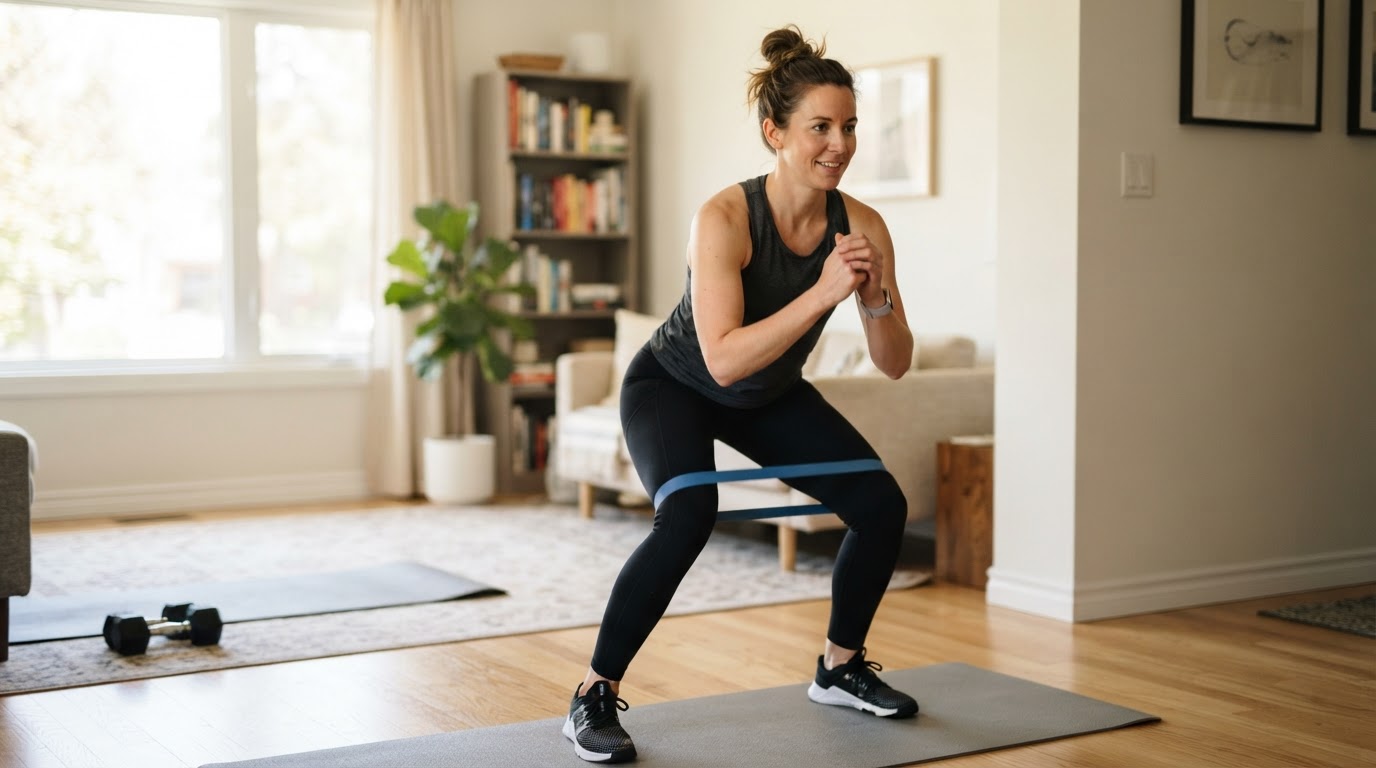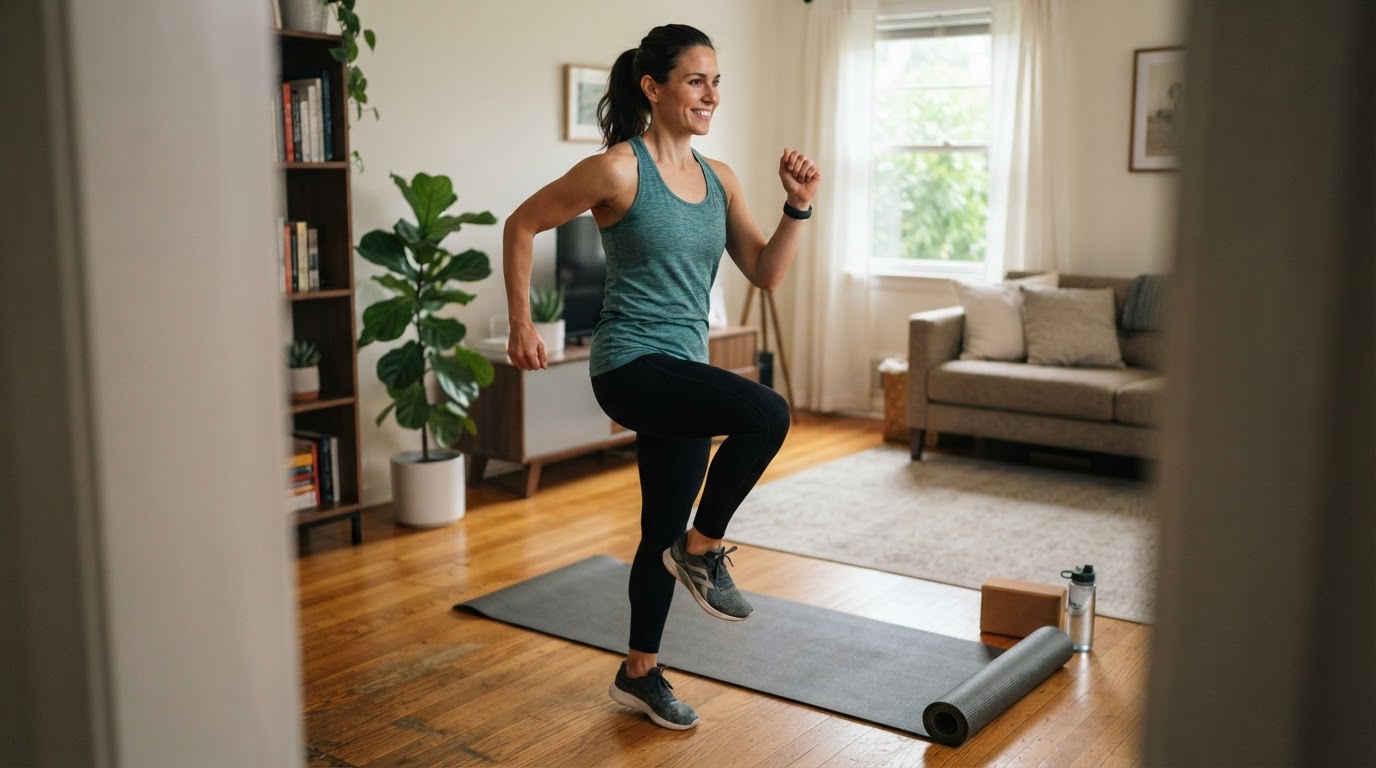
A cardio ladder changes duration instead of constantly changing exercises. You learn three quiet movements, then complete them for thirty, forty-five and sixty seconds before coming back down. That structure creates variety without choreography. Keep one foot close to the floor and choose a pace that lets you speak a short sentence. Anyone with balance, joint, heart, pregnancy, postpartum or other medical concerns should get appropriate individualized advice before beginning a new routine.
Affiliate disclosure: As an Amazon Associate I earn from qualifying purchases.
Build a clear rectangle, not a perfect gym

Move cords, rugs, toys and low furniture out of reach. A flat CAP fitness equipment mat on Amazon.ca (paid link) can mark the boundary, though most movements happen beside it. Put water where it cannot spill into the stepping path. Set the KADAMS kitchen timer on Amazon.ca (paid link) for visible intervals and keep the sound low if neighbours are a concern. Warm up for two minutes with easy marching, shoulder rolls and gentle side taps. If the floor is slippery or unstable, choose another area.
Learn the three moves before the ladder starts
Move one is a soft march. Move two is a side step with arms below shoulder height. Move three is an alternating knee lift or low toe tap. Practice each for twenty seconds. The Casio F91W watch on Amazon.ca (paid link) can track the total session while the timer handles intervals. Keep heels quiet, knees soft and steps small enough that the upper body does not sway. There is no jumping, running or rapid pivoting.
Climb from thirty to sixty seconds
Perform all three moves for thirty seconds each, resting or marching easily for fifteen seconds between them. Repeat at forty-five seconds, then sixty seconds. The effort can rise through a slightly quicker rhythm or larger arm swing, but add only one change. An adjustable aerobic step platform on Amazon.ca (paid link) is optional equipment for another workout; this ladder does not need it. A clear floor version is easier to repeat and removes platform setup.
Come down the ladder with quieter form

After the sixty-second round, repeat forty-five and thirty seconds. Fatigue can make footfalls louder, so shorten the step as needed. If you cannot maintain control, stay with easy marching or end the session. Do not add Yes4All ankle-weight pair on Amazon.ca (paid link) simply to make a short workout harder; extra load changes the demand and may not suit the movement. Quality should improve as the intervals shorten.
Record one useful detail
Walk slowly for two minutes and notice whether breathing settles. In the Clever Fox fitness journal on Amazon.ca (paid link), record the longest interval completed and which move became noisy or awkward first. That observation sets the next session’s target. Repeat the same ladder several times before adding another move. If the sixty-second round remains too long, use thirty, forty and fifty seconds instead. The ladder should scale to the room and current capacity.
Create three versions before you need them
Write an easy, standard and shorter version. Easy uses twenty-second intervals and longer marching rests. Standard uses the full ladder. Shorter completes only the climb and then cools down. Choosing among named versions is faster than negotiating with yourself mid-workout. All three count as the planned session when they match the time and energy available.
If music helps, choose it before starting and keep the volume low enough to hear the room. Avoid looking down at a phone for every transition; place the timer at eye level. In a shared home, tell others which small area is temporarily in use. These environmental details sound ordinary, but they prevent collisions, interruptions and rushed footwork—the exact problems that make a small-room routine feel harder than it is.
Keep the first session deliberately conservative. The ladder can be repeated later in the week, and familiarity usually improves coordination more safely than chasing intensity in one attempt. If the workout occurs upstairs, listen for heel impact and reduce range before adding a mat or equipment. Quiet movement begins with technique; a thick surface cannot make uncontrolled steps appropriate for every floor or building. Schedule the next attempt after a recovery interval that suits your overall activity plan, and choose an easy walk or ordinary household movement instead if fatigue is still affecting coordination.
A short check before you finish
- Use a stable, uncluttered exercise area.
- Choose control before speed, load or range.
- Stop for pain, dizziness or symptoms that concern you.
- Record one detail that makes the next session easier to repeat.
Twelve minutes is enough to practice a complete pattern: warm up, climb, descend and cool down. The next workout does not need a new video or playlist. Repeat the same three moves and make one improvement—quieter steps, steadier breathing or cleaner transitions. Consistency grows when the instructions are simple enough to remember.