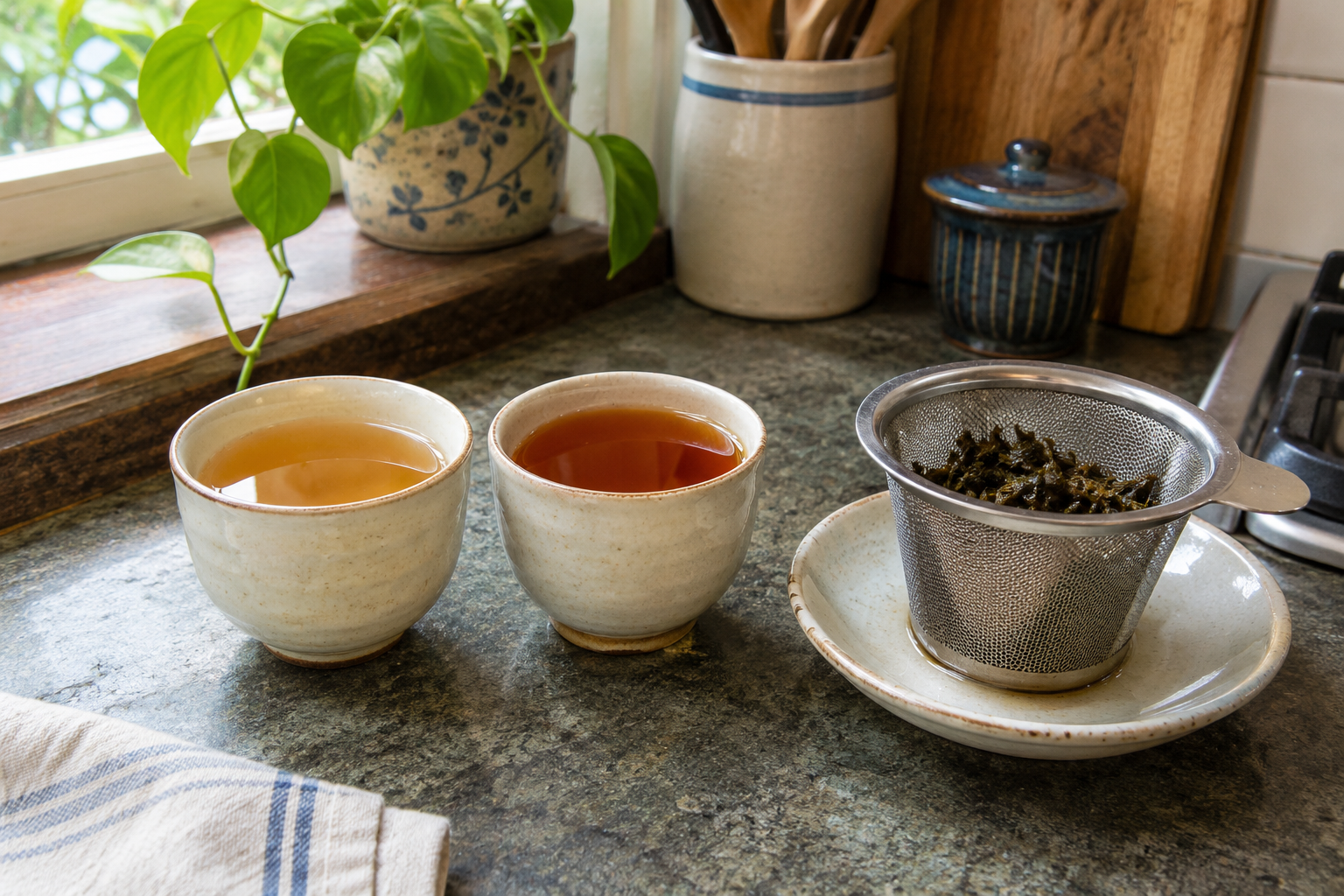
Two cups of tea from the same leaves can taste surprisingly different. The first may smell toasted while the second is softer, or the second may bring out an aroma you missed in the first. If you have a loose-leaf tea meant for multiple infusions, try the two pours side by side. You can do it with one infuser, two cups and the kettle you already use. The comparison takes only one tea break and gives you a brewing routine you can repeat without getting a new pot or building a collection of tasting cups.
As an Amazon Associate I earn from qualifying purchases.
Start with leaves that have a second steep in them

Check the package or the seller’s directions for a tea that specifically recommends more than one infusion. Whole-leaf oolongs are one place to look, and the same instructions may be available for other styles. Start with a tea you already enjoy if the maker gives you a second-steep method. If you choose a new one, give yourself room to be surprised. The second cup may simply be lighter, and that can be exactly what you want from it after lunch.
A removable basket infuser makes the experiment easier because you can lift the leaves clear of the water at the end of the first cup and use the same basket for the next one. Check that the rim fits your cup and leaves enough room for the tea to open up as it gets wet. Set a small heat-safe dish beside the cup for the dripping basket. If your teapot has a basket you can remove, use that and pour both infusions into small cups.
Make the first cup a reference you can repeat

Use the package’s starting proportions. A digital scale helps if it can reliably register the small amount of leaf you are using. When the label gives spoon measures, a level measuring spoon can be more practical than a scale that rounds every gram. Write down whichever measure you used. Use a heat-safe measuring jug to portion water if you want both brews to use the same volume. If you prefer to pour straight from the kettle, choose matching cups and fill them to the same level.
Follow the package directions for water temperature. A temperature-select kettle makes it convenient to repeat the same setting when the tea calls for something below a boil. A standard kettle and a suitable kitchen thermometer can also work. Once you pour, start a timer and lift out the basket at the recommended time. Put the first cup on the left or mark it with a scrap of paper. With two similar-looking cups and a busy kitchen, it is easy to forget which cup came first.
Give the second cup the same amount of water

Use the same leaves and keep the water volume steady. Follow the recommended second-steep time and temperature where the seller provides them. If there is only one set of directions, use that as a reference for the first trial. That gives you a simple starting point for deciding whether the leaves are worth steeping again. If the second cup feels thin, try a slightly longer second infusion on a different day and hold the other details steady. Changing one thing at a time makes the result easier to repeat.
A standalone kitchen timer is handy if you are making a snack while the leaves brew or you want your phone to stay at your desk. Match the cups if you can. A dark mug can make the tea look stronger than a pale cup, while a thicker cup may feel warmer in your hands. If your cups differ, pay attention to taste and aroma first. Wait until both are comfortable to sip. Comparing the first cup warm and the second cup very hot makes it harder to notice small changes.
Keep the notes short enough to use next time

Taste cup one, then cup two. Write one sentence in a small notebook about the difference you noticed. “The first smells toasted and the second tastes softer” is plenty. If you like a squeeze of lemon or a splash of milk, taste the tea plain first and then add a similar amount to each cup. The comparison is useful even if you decide you like both cups with lemon. It tells you what you would actually want to drink.
For your next tea break, repeat the version you enjoyed. Keep the clean basket and drip dish near the kettle so the setup is available when you want it. If you would only ever drink the first cup, make it and enjoy it. If the second steep is worth keeping, write the two times beside the name of the tea so you can find them again. Your final notes might be as simple as first cup after breakfast, second cup with a snack. The two-cup trial has done its job when it gives you an easy choice tomorrow.


Leave a Reply