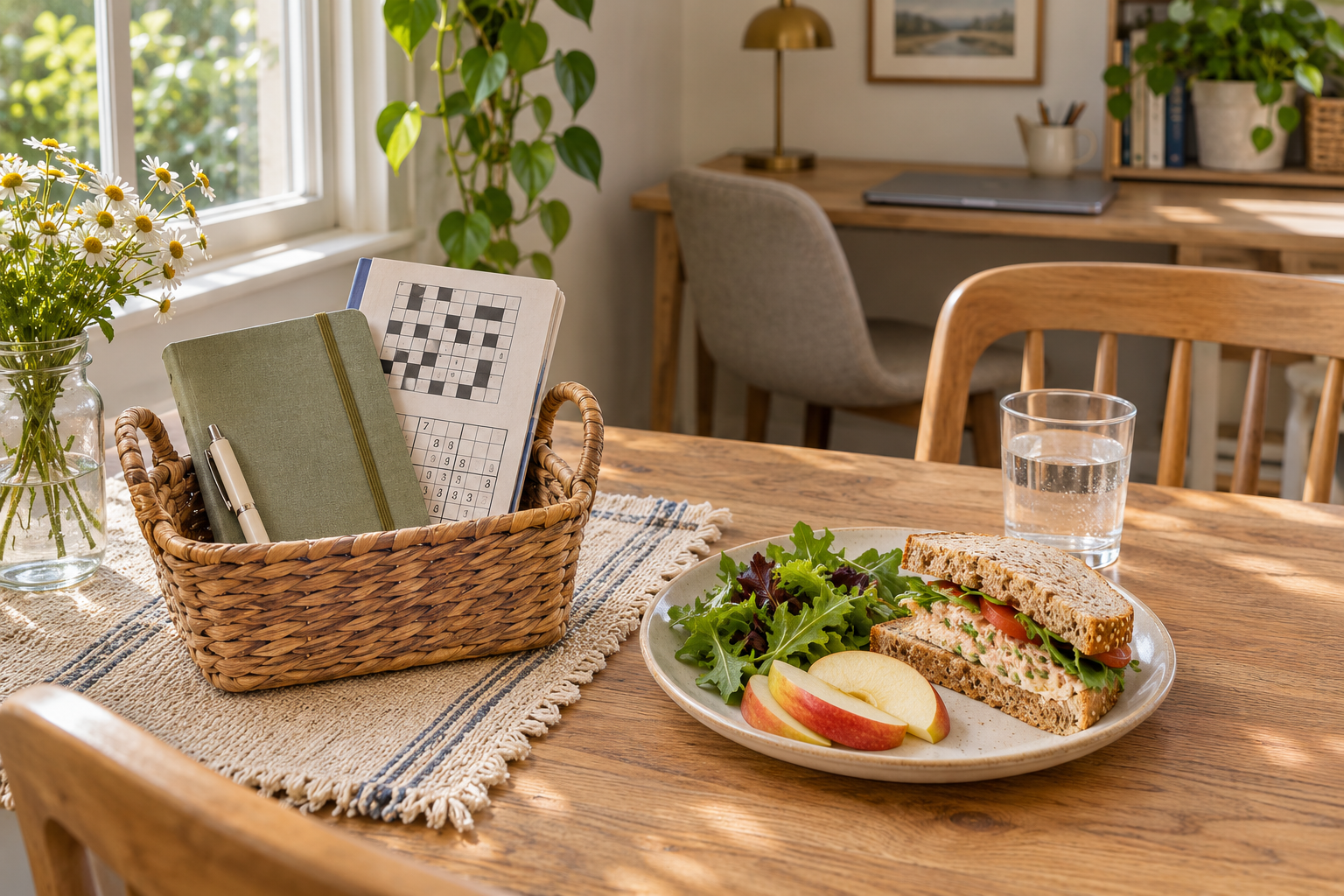
If you work or study at home, lunch can vanish into the same tab you had open all morning. You bring a plate to the desk, answer one message and look up when it is time to get back to work. A lunch break basket gives you something else to reach for as soon as you leave the screen. Put a few small activities in one spot, choose where to sit and decide when to return. Start with fifteen minutes if that is what your calendar allows.
As an Amazon Associate I earn from qualifying purchases.
Put the basket where lunch actually happens

Start with where you eat on an ordinary weekday. If it’s the end of the dining table, set a small handled basket on a nearby shelf. If it’s a kitchen stool, a shallow tray on the counter may be easier to reach and put away. Try the spot with a plate in one hand. You want to be able to grab the basket with the other, then leave enough room on the table for lunch. If the basket lives on a high shelf behind extra dishes, it will soon become one more thing you rarely take down.
Use one container that already fits the space. A clean shoe box or an unused desk tray can work for the first week. A handled basket comes into its own if you share the table and have to clear it quickly or if you move between the kitchen and balcony. Measure the shelf or cabinet before shopping so the handles clear the opening. Keep the contents light enough that carrying the basket feels as routine as carrying a mug.
Choose two activities with clear stopping points

Pick one thing for a quiet pause and one for a day when your mind still feels busy. A pocket crossword booklet gives you a task with a natural stopping point. You can do three clues and close it as easily as you can finish a whole grid. A compact notebook works for drawing the view outside, writing a few sentences or making a list of things you want to remember later. Slip a pencil through the notebook loop or park it inside the cover so you won’t have to search the desk for a pen.
Match the activities to the time you have. If the break is fifteen minutes, the activity might take only the last five after eating. A jigsaw puzzle with hundreds of pieces is likely to take up your lunch spot long after you’ve finished. A single-page word search or a small pack of prompt cards can come out and go away in seconds. If nothing in the basket interests you after a few tries, swap one item before adding more.
Keep your place without waking the screen

If you like reading at lunch, choose something in short sections. A collection of essays, a magazine or a book you already know can be easier to dip into while the kettle heats than a dense chapter with several threads to follow. A slim bookmark lets you stop exactly where you are and get back to the page tomorrow. If your hands are occupied, set the reading aside until you finish eating. There is no need to juggle a plate and a paperback just because both are on the table.
Try spending the first few minutes with the food and the rest with one activity. A fifteen-minute break could mean ten minutes to eat and five to read. If your lunch takes all fifteen, the basket can wait until the next day. One easy marker is to set a small standalone timer at the start and leave it on a surface you can hear from the table. If timers make meals feel rushed, set a single end-of-break alert and face the clock away from you.
Make it easy to leave work and come back

Before getting up, write the next action on a scrap of paper at your desk. “Reply to the second email” is easier to pick up than “work on inbox.” Leave the note where you’ll see it when you return. If you need to keep the phone nearby for a call, place it face down out of arm’s reach with the ringer set for that call if your device supports it. You are building a break you can use on a real workday, including days when you are waiting for a message.
After lunch, put the pencil, booklet and bookmark back in the basket. If a task occurred to you during the break, jot it in the notebook after you finish eating and choose whether it belongs on your desk list. Try the same setup three times before moving it. If you keep carrying the basket to the window seat, that may be where it should live. The best spot is the one you naturally pass when you pick up your plate.


Leave a Reply